



We live in a world where almost everything keeps going, all the time. Shops stay open late, your phone is never really switched off, and work can follow you wherever you go. We can exercise whenever we want, eat whenever we want, and stay awake until the early hours if we need to.
Convenient, absolutely. But our bodies are still part of nature.
We have a biological rhythm that responds to light and darkness, activity and rest, effort and recovery. The seasons also change the world around us. Days grow longer or shorter, temperatures shift, and nature moves with these changes.
Living in rhythm with nature doesn't mean throwing away your calendar and moving into a cabin in the woods. It simply means learning to listen again to the signals that have always been there.
We're Not Meant to Be Switched On All the Time
Daily life often revolves around action. Working, exercising, planning, performing and pushing forward. Rest usually comes only when everything else is done.
The problem is that everything is never really done.
That's why it can help to stop seeing rest as something you have to earn after being productive enough. Recovery isn't an interruption to your life. It's part of it.
Nature doesn't operate at full speed all the time either. There are periods of growth, bloom, activity and abundance, but also moments of slowing down and renewal.
We can't copy that rhythm directly into our own lives, but we can learn from it.
The Seasons as a Natural Rhythm
Every season has its own character. Spring brings more light and new growth. Summer invites us to spend more time outdoors and be more active. In autumn, the pace begins to change as nature gradually turns inward. Winter brings darker days and a quieter atmosphere.
Of course, our bodies don't literally change with the seasons in the same way trees do. Still, consciously adapting to seasonal rhythms can be a way to pay more attention to our energy levels and surroundings.
In summer, that might mean spending more time outdoors and moving your workout to the morning or evening when temperatures are cooler. In winter, a gentle yoga session, a walk or some mobility exercises can be a pleasant way to stay active without constantly pushing yourself to perform at your best.
It's not about following strict rules.
It's about making conscious adjustments.
Listening to Your Energy
An important part of living in tune with natural rhythms is learning to recognise when you have energy and when your body needs recovery.
That sounds logical, but it isn't always easy.
A busy schedule can make you push through simply because you feel you have to. You stick to your planned workout even after a poor night's sleep. You keep working because there's still something left to finish.
Sometimes, that's necessary. But when pushing through becomes the default, it becomes harder to recognise the difference between discipline and overstepping your own limits.
Yoga can help you become more aware of that distinction.
During a practice, you might notice that your body needs a gentle flow rather than an intense workout that day. Or perhaps you feel energised and ready for more of a challenge.
Both are perfectly fine.
Yoga as a Practice in Listening
Yoga isn't just about physical postures. Awareness is an important part of the practice.
You feel how your body moves, notice your breathing and observe where tension builds up. This helps you recognise signals you might otherwise ignore.
That makes yoga an interesting complement to other forms of movement, such as strength training, running or cycling.
Not every workout needs to be intense.
Sometimes, movement is about getting stronger. Sometimes, it's about maintaining mobility. And sometimes, it's simply about getting your body moving again.
The goal isn't always to do more, but to become better at recognising what you need.
Your Sleep Follows a Natural Rhythm Too
One of the clearest examples of our natural rhythms is sleep.
Your body has an internal biological clock, also known as the circadian rhythm. Light plays an important role in regulating it. Natural daylight helps signal to your body that it's time to be awake and active. In the evening, as light levels decrease, your body gradually begins preparing for the night.
You don't need to turn this into a complicated routine.
Take a walk outside in the morning. Get enough daylight during the day. Reduce exposure to bright light in the evening. And try not to sacrifice your sleep constantly for work, screen time or other activities.
These are simple habits, but they can help align your daily routine more closely with the natural cycle of day and night.
From Always Being Productive to Being Present
Living in rhythm with nature also means looking at productivity differently.
Not every moment needs to be useful.
A walk without a podcast. A few minutes of sitting without your phone. A gentle yoga session. Spending time outdoors without having to go anywhere in particular.
In a culture where we're used to filling almost every moment, these simple experiences can be surprisingly valuable.
Ultimately, mindfulness isn't about creating a perfectly quiet mind. It's about paying attention to what's happening right now.
That can be as simple as feeling your feet touch the ground as you walk or noticing how your breathing changes during yoga.
5 Ways to Live More in Tune with Nature
You don't need to change your entire life. Start small.
1. Get natural daylight every day.
Step outside in the morning or go for a walk during the day. You don't need to turn it into a workout.
2. Adapt your movement to your energy levels.
Feeling energised? Go for a more intense workout. Feel like your body needs recovery? Choose yoga, walking or mobility exercises instead.
3. Make room for rest without a purpose.
Rest doesn't have to be productive. Sometimes, doing nothing is exactly what your body needs.
4. Spend more time moving outdoors.
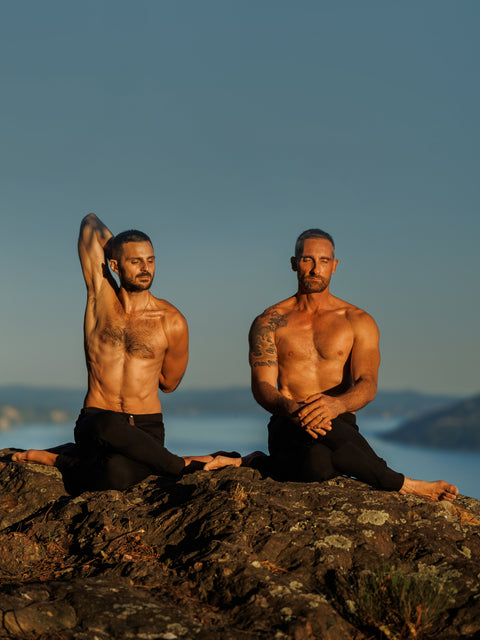
Practise yoga in the garden, take a walk through the woods or work out in the fresh air. These activities bring you into closer contact with your surroundings.
5. Pay attention to the seasons.
Ask yourself what this season calls for. Perhaps it's spending more time outdoors, moving more, slowing down or simply adjusting your daily routine a little.
What You Wear During Your Practice
Comfort also plays a role when you move outdoors or practise yoga. Clothing that feels restrictive, rubs against your skin or constantly shifts out of place demands attention that you'd rather give to your movement.
Good yoga clothing for men moves with your body. Comfortable yoga pants give you room to move through twists, stretches and different postures, while a soft yoga top feels good during both an active flow and a more relaxed practice.
At Renegade Guru, clothing isn't just about how it looks, but also about how it feels when you move. Clothing that works for yoga, a walk, a workout or simply a quiet day outdoors fits naturally into a lifestyle where movement and mindfulness go hand in hand.
Finding Your Way Back to a Natural Rhythm
We can't simply put the modern world on pause. And we don't have to.
Living in rhythm with nature doesn't mean avoiding all technology or following a rigid schedule every day. It's about something much simpler: paying attention again to the signals of your body and the world around you.
When you have energy, give yourself space to move and create. When your body needs recovery, allow yourself to slow down. When darkness falls, let your day gradually come to an end.
Nature doesn't fight against its own rhythms. It continually moves between activity and rest, light and darkness, growth and recovery.
Perhaps we don't need to follow that rhythm completely.
But we can learn to listen to it a little more.